Botany Blog Plants of the Northeastern U.S.

March 23, 2010

Mycorrizae and Sugar Maple

Filed under: Mycorrhizae — admin @ 02:51

I currently have an experiment in progress with the goal of testing if AM fungi aid in the establishment of seedlings that exhibit epicotyl dormancy. One of the experimental treatments involves planting a seed with that trait along with seedlings of Sugar Maple (Acer saccharum). The Sugar Maple is included as a carbon source in the symbiotic relationship. The reason I am using Sugar Maple is that it forms mycorrhizae with AM fungi, unlike most other trees which associate with ectomycorrhizae.

Unfortunately the germination rates for the Sugar Maple seeds have been very poor so the experiment is not likely to yield results that would survive peer review. However, those that have are already exhibiting what appears to be a significant difference in size between the treatments with AM fungi and those without.

Maples

The Maple seedlings on the right were treated with spores of several Glomus spp. shortly after germination. The seedlings on the left were grown in sterile media with no Glomus spp.  In a few months I plan to remove the seedlings, dry them and then weigh them. A portion of the roots will be saved and examined for the presence of aseptate hyphae.

March 20, 2010

Algae Biofuel

Filed under: Algae — admin @ 22:46

I’ve been watching March Madness on demand (ncaa basketball) and just about every other commercial has been for ExxonMobil’s foray into algal oil research. Having studied algae a bit this subject has peeked my interest. Exxon has partnered with Synthetic Genomics, Inc to study the potential of algae as a source of bio-fuels and is expected to devote in excess of $600 million to this research.

This is not an entirely new concept but it appears to be one of the largest investments in algal oil research to date.  A great deal is known about culturing algae for other uses. Algal cultures are used extensively in aquaculture of clams and oysters. About 40% of the costs of producing juvenile bivalve seed in a hatchery is from the production of algae cultures.

Many algae reproduce rapidly when sufficient light, CO2, and nutrients are supplied. Anyone who has kept an aquarium or pond is probably familiar with algae blooms. Commercial ventures must maintain pure stock cultures since eventual contamination with other organisms eventually causes algal populations to crash, and this adds to the cost of culturing algae on a large scale.

It happens that many of the species that my students examine in the classroom have been investigated as possible algal oil sources. These include the filamentous green algae Oedogonium and Spirogyra. These are probably more familiar to people as components of “pond scum”, which makes the potential use of these organisms for bio-fuels all the more interesting.

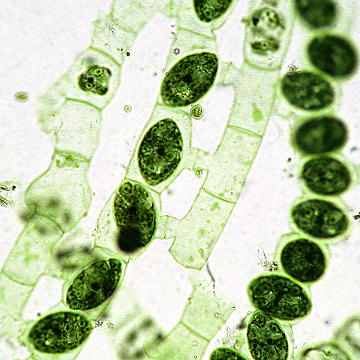
Algae in the genus Spirogyra are known for their unbranched, filamentous thalli containing long, spirally arranged chloroplasts within each cell.

Spirogyra

Sexual reproduction in Spirogyra occurs via conjugation, where two adjacent filaments form connections (conjugation tubes). The contents of the joined cells serve as isogametes (Raven et al., 2007). In the images below the isogametes from one filament can be seen moving into the cells of another filament. Where they meet they form a zygote.

Spirogyra Conjugation


Literature Cited

Raven, P.H., Evert, R.F., and S.E. Eichhorn. 2007. Biology of Plants, 7th ed. Worth Publishers, Inc., NY.

March 10, 2010

Venus Flytrap Animation

Filed under: Uncategorized — admin @ 23:00

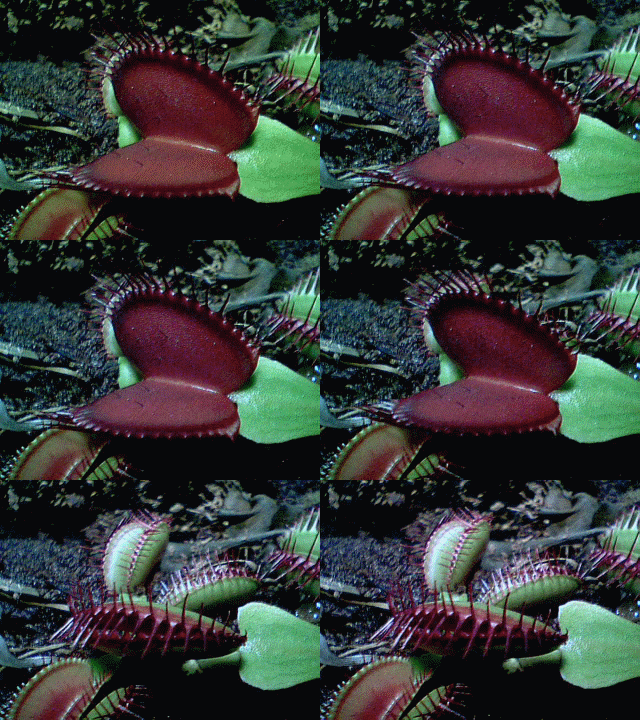
I have been experimenting with creating videos of plants lately. This one was shot using a webcam and it worked reasonably well.

Venus Flytrap Animation

This is an example of a nastic response to a stimulus. Specifically it is thigmonasty, a non-directional response to touch or vibration. The leaf of a venus flytrap is divided into two lobes, each of which bears three trichomes (hair-like structures). The closing of the “trap” is triggered by touching one of the little trigger hairs twice or by hitting two of them in succession. Somehow this causes a change in turgor pressure in the cells of the leaf and a rapid change in shape, allowing the trap to close rapidly.

February 28, 2010

Dark Septate Endophytes

Filed under: Mycorrhizae — admin @ 02:49

Dark septate endophytes (DSE) are a heterogenous group of conidial or sterile fungi (thought to be ascomycetes) with darkly-pigmented, septate hyphae that commonly colonize plant roots. Most DSE also produce intracellular structures called microsclerotia. It has been suggested that these microsclerotia may serve as dispersal structures (Currah et al., 1993), although the actual purpose appears to be unknown. Perhaps they serve a storage function for the fungi as do the vesicles of AM fungi?

The following images show septate hyphae of a DSE growing in and around a root of Eurybia divaricata. The first image shows net-like strands formed by the hyphae of a DSE:
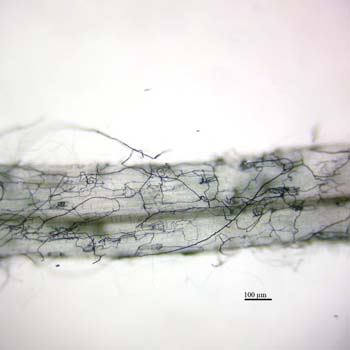
DSE covering a root of White Wood Aster

 The next image depicts several hyphae ending in microsclerotia, which appear as grape-like clusters.
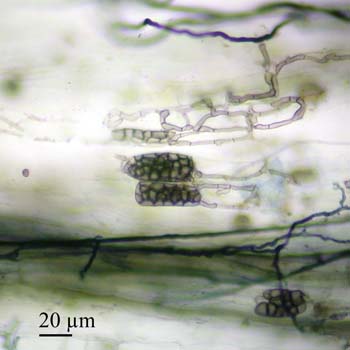
Dark septate hyphae and miscrosclerotia

Another  morphotype can be seen with a root of Maianthemum racemosum in the following image:
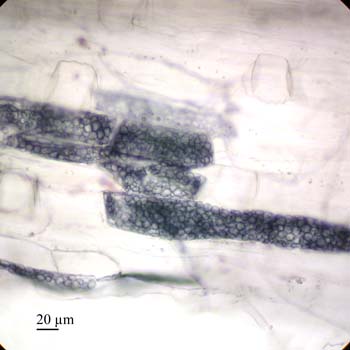
Microsclerotia in a root of False Solomon’s Seal

The taxonomy of this group is poorly understood and little is known of the role that DSE play in natural ecosystems (see review by Jumpponen and Trappe 1998). DSE are difficult to identify from field samples so many may not yet be known. A few of the species identified to date (mostly from bioassays) include Chloridium paucisporum, Leptodontidium orchidicola, Phialocephala dimorphosphora, Phialocephala fortinii, and Phialophora finlandia. Of these, Phialocephala fortinii appears to be the best studied. Unlike AM fungi, the DSE that have been studied to date do not require a plant host and many can be grown as pure cultures.

Available evidence suggests that DSE range from strongly pathogenic to non-pathogenic to mycorrhizal for plants. Some strains of DSE may be involved in host plant nutrient acquisition and it has been proposed that this may be a mutualistic, mycorrhiza-like relationship (Jumpponen and Trappe 1998). These relationships do not appear to be host specific (Jumpponen and Trappe 1998), with some strains forming ectendomycorrhizas but also associating with other hosts in ways not completely understood (Jumpponen 2001).

Although their mycorrhizal status is uncertain (Jumpponen and Trappe 1998), DSE are commonly associated with the roots of herbaceous and woody plants from alpine, boreal and northern temperate ecosystems (Haselwandter and Read 1980, Holdenrieder and Sieber 1992; O’Dell et al. 1993; Ahlich and Sieber 1996). To date, carbohydrate flow from a host plant to a DSE has not yet been demonstrated as it has for AMF (Jumpponen 2001). Despite their ubiquity in terrestrial ecosystems, the role of DSE in plant nutrient acquisition and plant community assemblage remains largely unknown. Given the ubiquity of DSE in many terrestrial ecosystems and their possible mycorrhiza-like relationships with plants, studying this group of fungi could increase our understanding of plant community assemblage.

Literature Cited:

Ahlich, K. and T.N. Sieber. 1996. The profusion of dark septate endophytic fungi in non-ectomycorrhizal fine roots of forest trees and shrubs. New Phytologist 132:259-270.

Currah, R.S., Tsuneda, A., and Murakami, S. 1993. Morphology and ecology of Phialocephala fortinii in roots of Rhododendron brachycarpum. Canadian Journal of Botany 71:1639-1644.

Haselwandter, K. and D.J. Read. 1980. Fungal associations of roots of dominant and sub-dominant plants in high-alpine vegetation systems with special reference to mycorrhiza. Oecologia 4:557-62.

Holdenrieder, O. and T.N. Sieber. 1992. Fungal associations of serially washed healthy non-mycorrhizal roots of Picea abies. Mycological Research 96:151-156.

Jumpponen, A. and J.M. Trappe. 1998. Dark septate endophytes: a review of facultative biotrophic root-colonizing fungi. New Phytologist 140:295-310.

Jumpponon, A. 2001. Dark septate endophytes – are they mycorrhizal? Mycorrhiza 11:207-211.

O’Dell, T.E., H.B. Massicotte and J.M. Trappe. 1993. Root colonization of Lupinus latifolius Agardh. and Pinus contorta Dougl. By Phialocephala fortinii Wang & Wilcox. New Phytologist 124:93-100.
February 24, 2010

Plasmolysis

Filed under: Uncategorized — admin @ 02:04

Plant cells rely on internal hydrostatic pressure to maintain their shape. This pressure is maintained by a relatively high solute concentration inside the vacuole, which results in the absorption of water from outside the cell via osmosis (Raven et al., 2007). As the vacuole swells with water, the protoplast increases in size and the plasma membrane pushes up against the inside of the cell wall, resulting in turgor pressure. The turgor pressure is counteracted by the call wall and these opposing forces help maintain the shape of the cell and ultimately support herbaceous plant tissues.

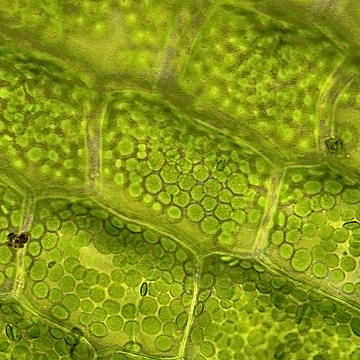
The image below show cells in a leaf of Elodea canadensis that was placed in a solution of distilled water. The small green structures are the chloroplasts inside the cells and notice that they are distributed near the cell wall.

 Normal Plant Cell

Elodea cell in a solution of distilled water

If a plant does not receive sufficient water or is placed in environment that is hypertonic (one that has a higher solution concentration than the plant cells, e.g. a salty environment), than the cells will lose water and the plants will wilt. This is because water will be drawn out of the vacuole through osmosis, the protoplast will shrink, and the plasma membrane will actually pull away from the cell wall (plasmolysis), resulting in a loss of turgor pressure.

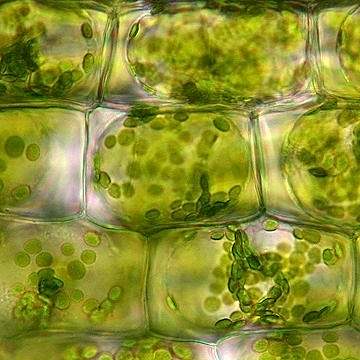
The following image shows an Elodea leaf that was placed in a 20% sucrose (sugar) solution. Note how the inside of the cell is shrinking and the gap between the plasma membrane and the cell wall (the cell wall does not shrink because it is somewhat rigid due to the presence of cellulose microfibrils).

Plasmolysed plant cell

 Elodea cell in a solution of 20% sucrose

Literature Cited

Raven, P.H., Evert, R.F., and S.E. Eichhorn. 2007. Biology of Plants, 7th ed. Worth Publishers, Inc., NY.

February 8, 2010

Eastern Comma

Filed under: Plant-Insect Interactions — admin @ 22:25

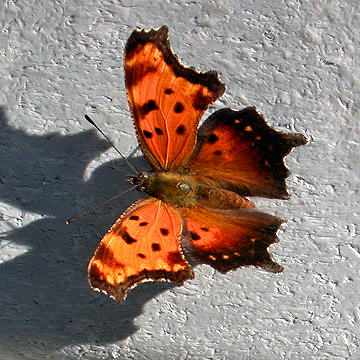
Spring semester is in full swing so it has been difficult to find time to write of late. I shot this image of an Eastern Comma (Polygonia comma) last summer as it was resting on a bench along the boardwalk that leads into a poor fen here in central NY.

Eastern Comma

This butterfly occurs throughout most of the eastern half of the United States and has two broods a year. The larvae will feed on a variety of host plants including False Nettle (Boehmeria cylindrica), Wood Nettle (Laportea canadensis), American Elm (Ulmus americana) and Stinging Nettle (Urtica dioica). Adults feed on the sap of trees (Layberry et al. 1998).

Literature cited:

Layberry, R.A., Hall, P.W., and Lafontaine, J.D. 1998. The Butterflies of Canada. University of Toronto Press.

January 17, 2010

Passiflora x belotii

Filed under: Plant-Insect Interactions — admin @ 02:31

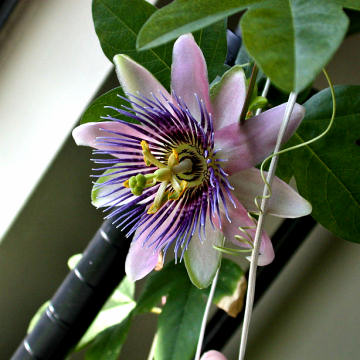
Passiflora x belotii is the name given to the hybrid of P. alata and P. caerulea. It is a sterile hybrid that will not produce fruit but is a prolific bloomer when given plenty of light. The flower shown here was taken from one of my plants that was erroneously labeled P. incarnata at the nursery where I bought it.

Passiflora x belotii

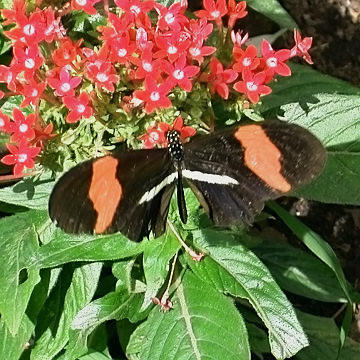
There are over 450 recognized species in the genus Passiflora (Vanderplank 1996). Most are vines, but a small number can grow as trees (e.g. P. lindeniana). Most people recognize passionflowers as having purple and white flowers, but there are species that produce white, pink, yellow, red and even orange flowers. The flowers of the hybrid shown here are very fragrant with a scent similar to that of the fruit of P. edulis. The foliage of passionflowers is toxic primarily due to the presence of cyanogenic glycosides. When a leaf is chewed by an insect, these glycosides interact with ezymes in the leaf (much like when a glow stick is “broken” allowing the chemical components to mix) and release hydrogen cyanide as a by-product. A group of tropical and subtropical butterflies (subfamily Heliconiinae) have co-evolved with plants in the genus Passiflora and have developed the ability to somehow metabolize these compounds and use them as a defense against predators (Engler et al. 2000).  One of the better known species is the red postman butterfly, Heliconius erato, which is often displayed in butterfly houses at botanical gardens and nature centers.

Heliconius erato

This image was taken at Hershey Gardens in their butterfly house. It is worth noting that the garden does not breed or raise their butterflies; they purchase pupae from places in the tropics that rear caterpillars, some of which are sold while others are released back into the wild to aid conservation efforts in areas where suitable habitat is diminishing.

Engler, H.S., Spencer, K.C. and Gilbert, L.E. 2000. Insect metabolism: Preventing cyanide release from leaves. Nature, 406, 144-145.

Vanderplank, J. 1996. Passion Flowers, 2nd ed. The MIT Press. Cambridge, MA.

January 1, 2010

Water Net (Hydrodictyon reticulatum)

Filed under: Algae — admin @ 16:00

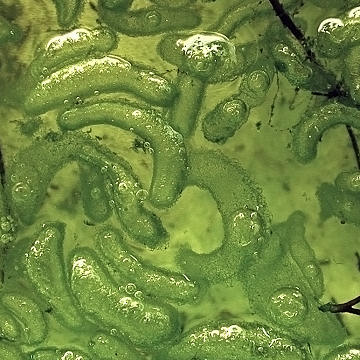
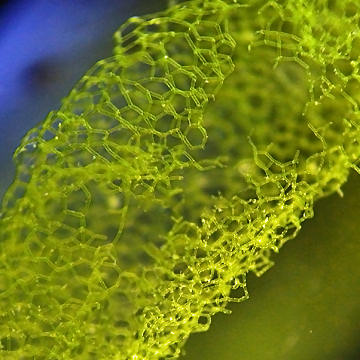
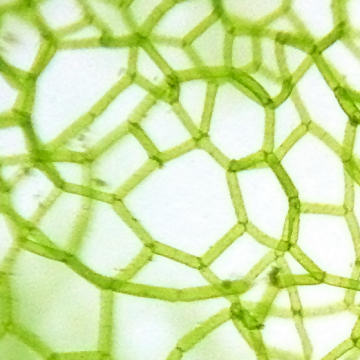
It would seem that the subject of my posts keep getting smaller and smaller. These images are of a common green algae (phylum Chlorophyta) commonly known as Water Net. It gets its name from the pentagonal or hexagonal branching pattern of the filaments making up the body (thallus) of the algae. These specimens came in on a sample of Chara, another green algae that is considered to be the closest living relative to plants. I took a sample of the Chara out the other day to photograph and left the sample in a dish of water under some lights. After about a week these little green ‘bubbles’ started appearing and have continued to get progressively larger.

Hydrodictyon reticulatum

I was really curious what this stuff was but couldn’t really find anything that fit the description. I was already aware that water net was growing in the tank where I am keeping the Chara, but the filaments on these were not visible to the naked eye. It wasn’t until I got out a hand lens that they became apparent.

hydrodictyon2.jpg

Apparently they can form these somewhat spherical colonies that just keep expanding as the thallus divides. I got one good closeup showing how each filament is connected to two other filaments, which creates the unique branching pattern and allows the colony to take on a 3-dimensional form.

hydrodictyon4.jpg

Algae in the genus Hydrodictyon are isogamous (gametes all alike) and the cells are coenocytic (multinucleate). Dictyo is Greek for net-like, so the genus means the same as the common name.

« Newer Posts

Powered by WordPress